

 by
by 
Table of Contents
- Accurate Property Boundary Identification
- Navigating Zoning Regulations and Compliance
- Uncovering Land Use Restrictions and Easements
- Detecting Structural Defects and Hidden Risks
- Immense Leverage for Price Negotiation
- Protect Your Real Estate Investment with Momoh Jimoh and Associates
- Frequently Asked Questions
The seller has answered every question with confidence. The photos look clean. The price fits your budget. A handshake feels close. Right before your pen touches the paper, one question should stop you cold.
Have you hired a real estate surveyor?
Most property buyers in Nigeria skip this step. Not because they do not care, but because nobody told them it was non-negotiable. They trust the seller’s word. They trust the way the land looks. They trust the freshly painted walls and the neatly cleared plot. And then, sometimes months later, sometimes years later, the truth surfaces in the form of a boundary dispute, a building ban, a structural crack, or a forged document.
Purchasing property is one of the most significant financial decisions of your life. The margin for error is thin, and the consequences of a mistake are long. A professional pre-purchase property survey closes that margin. It replaces assumptions with facts. And it gives you the one thing no seller can give you: an independent, certified truth about what you are actually buying.
Here are the top five reasons to hire a certified real estate surveyor before your next property investment.
Accurate Property Boundary Identification
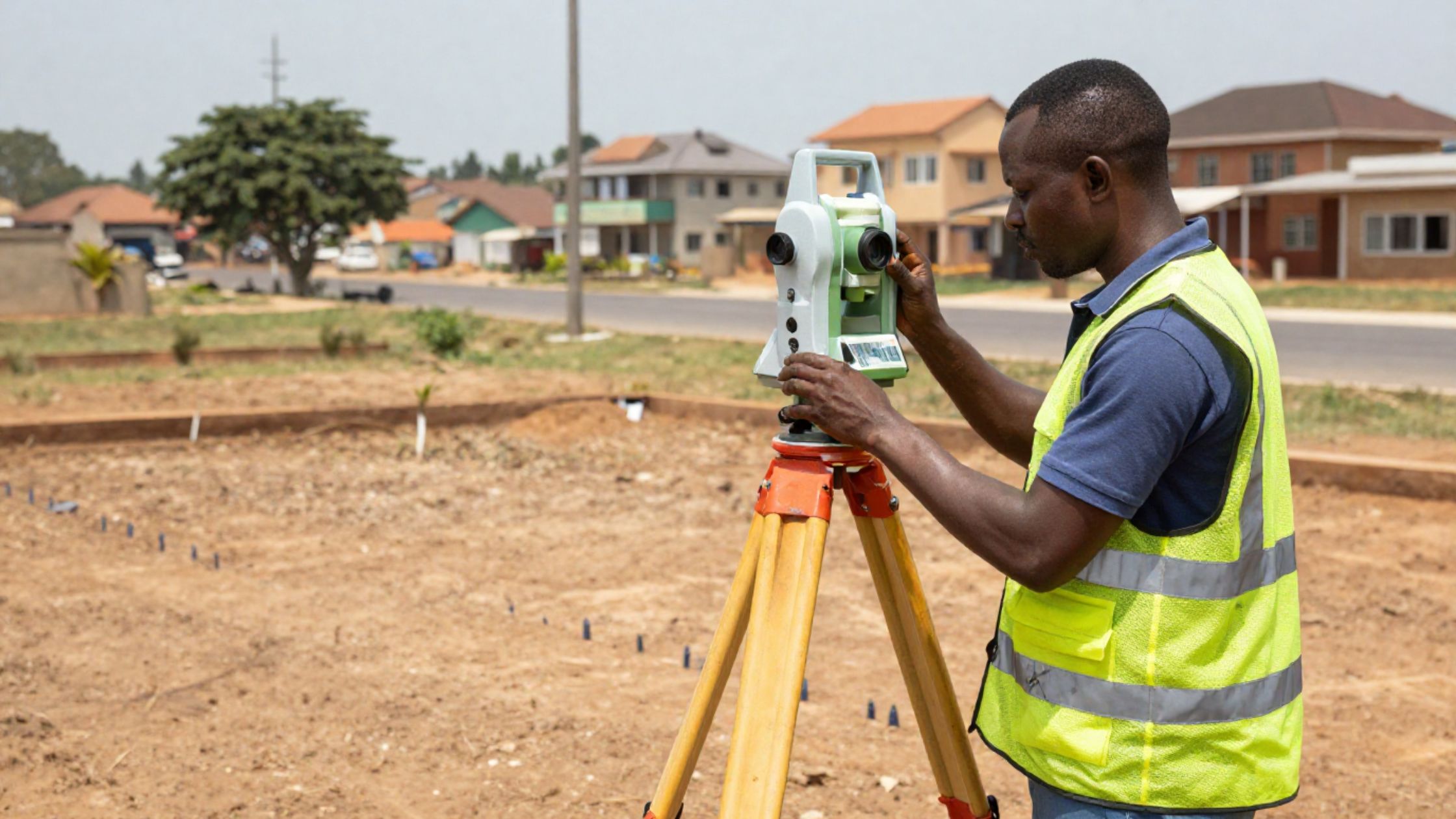
Many buyers look at a fence and assume it marks the edge of the property they are buying. Many walk along a wall and assume the land behind it is included in the sale. These assumptions are some of the most expensive mistakes made in Nigerian real estate.
Fences rust, shift, and get rebuilt. Old boundary markers get moved, buried, or ignored. And sellers do not always know the exact perimeter of what they are selling, which means you can end up paying full price for a plot that is smaller than you were told.
A real estate surveyor uses precision instruments to establish the exact legal boundary of the property. They physically measure the site and cross-reference those measurements with the original land registry records. Every corner, edge, and meter is confirmed against official documentation.
This process of accurate property boundary identification detects problems that a casual site visit will never reveal. Your surveyor might find that a neighbor’s fence actually sits one meter inside the property you are about to buy. Or that the seller has been marketing a plot that includes a strip of land belonging to someone else entirely.
“A fence tells you where a neighbor believes the property ends. A survey tells you where the law says it does. Never build your most important financial decision on someone else’s belief.”
– Market Wisdom
Settling boundary questions before money changes hands protects you from land encroachment disputes, legal battles, and the cost of demolishing structures built in the wrong place.
Navigating Zoning Regulations and Compliance
Every piece of land in Nigeria sits under a set of rules that determine what you are allowed to build on it and how you are allowed to use it. These rules are called zoning regulations. They are enforced by state and local government planning authorities, and they are not flexible.
Zoning laws divide land into categories. A plot zoned strictly residential cannot legally house a warehouse or a commercial office without formal approval. Land classified as agricultural cannot be converted into a housing estate without going through a regulatory process. Some areas sit in flood plains or conservation zones where construction is either heavily restricted or completely prohibited.
The problem is that these designations are not always obvious from a site visit. The land looks usable. The location feels right for your plan. And the seller, who may not be fully informed or fully honest, assures you that everything is in order.
A professional real estate surveyor conducts a thorough check on zoning regulations and compliance parameters linked to the property. They identify what the land is legally designated for, what you are permitted to build, and whether any planned development in the area could affect the value or usability of your purchase.
This step matters enormously for investors and commercial buyers. If your business plan requires a multi-storey office building on land zoned for single-family residential use, the survey report catches that conflict before you have spent a single naira on architectural drawings or building materials.
Knowing the zoning status of a property upfront also protects you from purchasing an asset that simply cannot support your goals. What looks like an opportunity on the surface becomes a liability the moment the planning authority says no.
Uncovering Land Use Restrictions and Easements
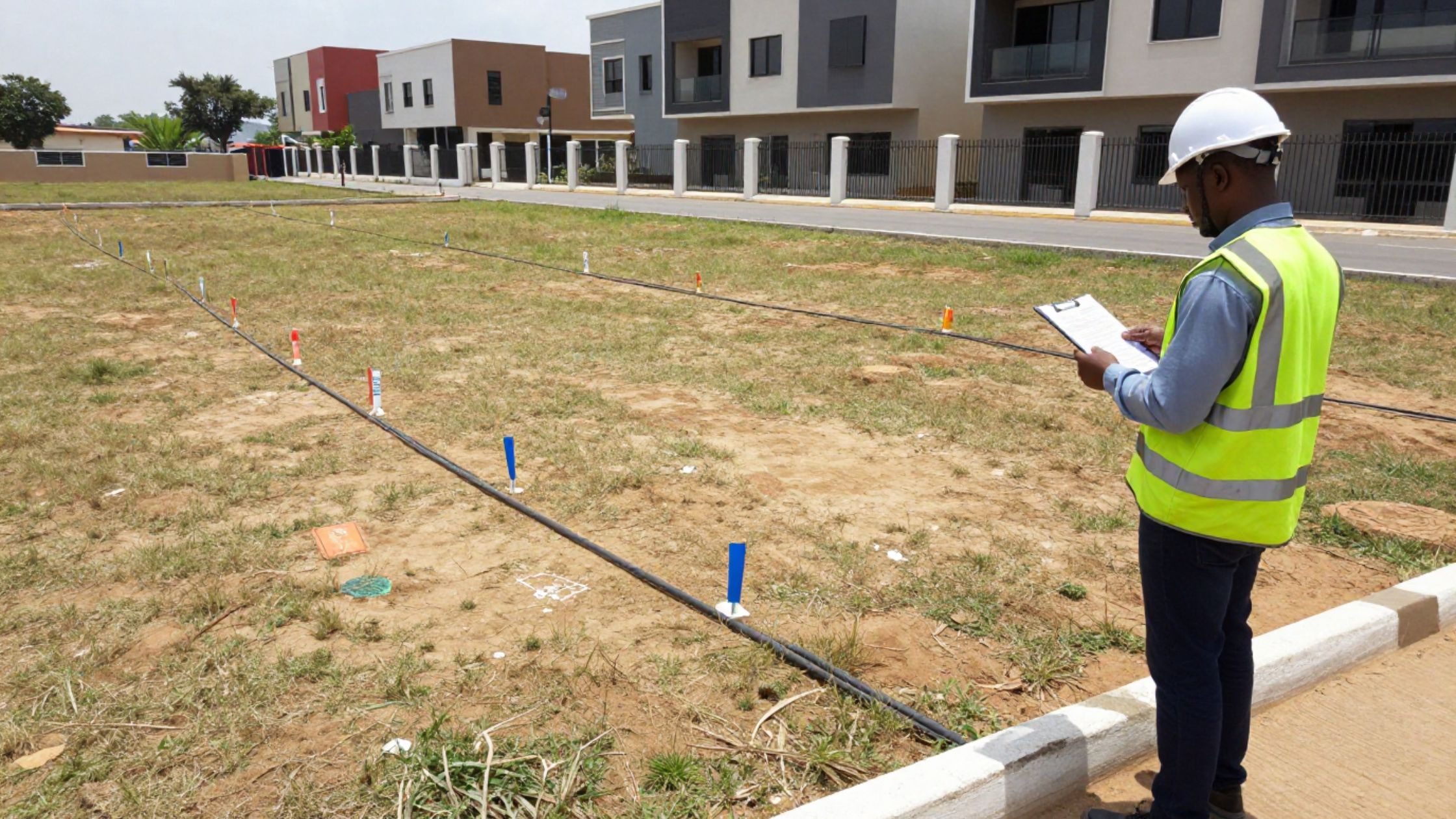
Zoning regulations are public rules. But some of the most damaging restrictions on a property are hidden inside private documents. These are called land use restrictions, and they include a specific legal arrangement known as an easement.
An easement is a legal right that gives another party access to a specific portion of your land, even after you own it. This is not a hypothetical risk. Municipal water lines, gas pipelines, power cables, and drainage channels run beneath the ground of properties across Nigeria. The local authority or utility company that maintains those lines holds a legal easement over that strip of land. You own the plot, but you do not control what happens in that zone.
The danger is in what you cannot see. A buyer plans to construct a building on a commercial plot. Construction begins. Then a government engineer arrives on site and stops the work. The foundation being dug lies directly over a municipal water line, and the easement prohibits any construction in that corridor. The buyer must demolish the partially built structure and redesign the entire layout at their own cost.
A real estate surveyor reviews the structural layout of the property alongside the full title documentation. They flag every easement, every restrictive covenant, and every right-of-way attached to the land. Restrictive covenants are written agreements in the title deed that limit specific uses of the property. Some prevent subdivision. Others restrict the height of structures. Others dictate what materials a building must be constructed from.
Knowing these restrictions before you buy tells you exactly how much of the land you genuinely control. You stop paying for usable space you cannot use.
Detecting Structural Defects and Hidden Risks
When you buy an existing building, what you cannot see with your eyes costs the most money to fix. Sellers understand this. A fresh coat of paint covers severe damp. A new ceiling panel hides a failing roof structure. Carefully placed furniture sits over floor cracks that run deep into the foundation.
A standard mortgage valuation from a bank’s appointed professional does not protect you here. That valuation tells the lender whether the property is worth the loan amount. It does not look for internal faults in the structure. It is a financial check, not a safety check.
An independent structural defects inspection by a certified real estate surveyor goes far deeper. The surveyor examines the integrity of the foundation and looks for signs of settlement, cracking, or shifting. They inspect the roof timber for rot, pest damage, and water ingress. They check the drainage systems for blockages or failures that drive long-term damp into the building. They assess the stability of the walls and the condition of the electrical and plumbing installations.
“The most expensive words in real estate are: ‘I thought it was fine.’ A professional survey exists precisely so you never have to say them.”
– Market Wisdom
For land purchases, the structural inspection covers the soil condition. Some plots in Nigeria sit on unstable, waterlogged, or rocky terrain. Building on poor soil without proper geotechnical assessment leads to foundation failure after construction begins, and that repair bill runs into millions.
Discovering these issues before you sign the purchase agreement gives you a clear choice. You walk away from a bad investment entirely. Or you factor the full cost of repairs into your financial plan and negotiate accordingly. Both outcomes are better than discovering structural failure after the transaction is complete.
Immense Leverage for Price Negotiation

By the time your surveyor finishes their work, you hold something the seller does not have: a certified, independent, data-backed account of the property’s true condition. This changes the entire dynamic of the transaction.
If the survey report identifies boundary discrepancies, the seller must resolve them before the deal proceeds. If structural defects are discovered, you present the report and request a direct reduction in the purchase price to cover the cost of repairs. If zoning compliance issues or easements surface, you negotiate for the seller to resolve them at their own expense before closing.
This is not confrontational. It is professional. The certified survey report takes a subjective argument about price and converts it into a business conversation grounded in verified facts. The seller cannot dismiss a registered surveyor’s findings the way they can dismiss your personal concerns.
Most buyers who commission a pre-purchase property survey find that the money recovered during negotiation is significantly higher than the professional fee they paid for the survey. In many cases, a single boundary correction or structural repair factored into the purchase price saves the buyer hundreds of thousands to millions of naira.
Beyond individual negotiations, the survey report also protects you from a more subtle risk: overpaying simply because you lacked information. When you walk into a negotiation knowing the exact legal boundaries, the zoning status, the structural condition, and the legal restrictions of the property, you negotiate from a position of knowledge. That position always produces better outcomes than goodwill and assumptions.
Protect Your Real Estate Investment with Momoh Jimoh and Associates

Entering a property deal without a real estate surveyor is not a calculated risk. It is an avoidable one. And the cost of avoiding it always lands on the buyer.
Sellers present properties in the best possible light. That is their job. Your job is to verify every claim independently before your capital is committed. A certified pre-purchase property survey is the most direct and reliable way to do that.
What Momoh Jimoh and Associates Offers
Momoh Jimoh and Associates is a licensed, registered real estate and surveying firm with over eighteen years of operation across Nigeria. The firm is registered with the African Real Estate Society, and the International Valuation Standards Council.
The firm’s surveying services cover the full scope of what a buyer needs before committing to a purchase. Accurate boundary surveys establish the exact legal perimeter of any land or property. Structural inspections identify hidden defects in existing buildings before they become your financial problem. Zoning and compliance checks confirm whether your intended use of the land is legally permitted. Land title verification confirms the authenticity and cleanliness of the ownership documents.
The firm also offers a dedicated land verification service. In a market where fraudulent title documents and disputed land ownership remain serious concerns, this service gives buyers an independent verification of land ownership, boundary authenticity, and legal encumbrances before any money moves.
Who Needs a Survey Before Buying
If you are a first-time home buyer, a survey protects you from purchasing a property with hidden structural damage or a disputed boundary. If you are an investor buying land for development, the survey confirms the zoning status and reveals any easements that restrict your construction plan. If you are a commercial buyer, the compliance review tells you exactly what the law permits you to build and operate on the site. And if you are purchasing for rental income, the structural defects inspection ensures you do not inherit maintenance costs that eat directly into your returns.
There is no type of buyer for whom a pre-purchase survey is optional. It is always necessary and almost always profitable.
How to Engage the Team
Contact Momoh Jimoh and Associates directly through their website or by sending a property request. The team responds within 24 hours. A registered surveyor is assigned to your case, a site inspection is scheduled, and your certified survey report is delivered within the agreed timeline.
The survey report you receive is legally recognized, professionally certified, and accepted by Nigerian financial institutions, government bodies, and courts. It is not just peace of mind. It is documented protection.
Take a minute and talk to an expert at Momoh Jimoh and Associates before you make that big property purchase or building decision.
Frequently Asked Questions
A real estate surveyor determines property boundaries, identifies zoning regulations, assesses land use restrictions, and uncovers any potential encroachments, ensuring that buyers have a clear understanding of the property they wish to purchase
The cost of hiring a real estate surveyor can vary significantly based on factors such as location, property size, and the complexity of the survey. On average, fees can range from a few hundred to thousands of naira. You may even get a free service if you buy the property directly from the realtor.
It’s best to hire a real estate surveyor early in the buying process, ideally before making an offer or during the due diligence phase. This allows you to address any potential issues before finalising the purchase.
While it may be tempting to rely on the property listing, it’s risky to skip hiring a surveyor. Listings may not always provide complete or accurate information, and a surveyor can reveal critical details that could impact your investment.

Join The Discussion